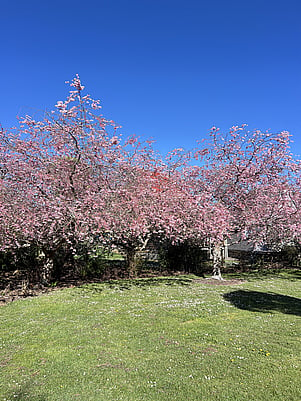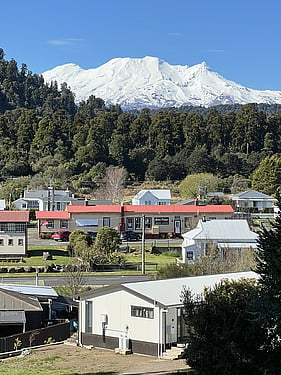
Spring in Ohakune can create a bit of a dilemma. Do you load the skis into the car, throw the mountain bike on the back, pack the walking shoes, or somehow find room for all three?
Winter certainly hasn’t finished with us yet. There’s still snow on Mt Ruapehu and some of the best skiing of the season can happen in spring, but down in town the days are getting longer, the bikes are coming out and the walking tracks are looking increasingly inviting.
It’s one of my favourite times of year in Ohakune because you suddenly have a lot of choices. And, if you plan it right, you can fit quite a few of them into one weekend.
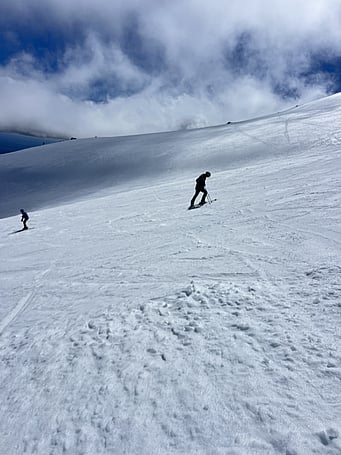
Spring skiing at Tūroa
Spring skiing has its own rhythm.
You don’t necessarily need to be racing up the Ohakune Mountain Road first thing in the morning. After a cold clear night the snow can start out firm, but give the sun a little time to do its job and everything begins to change.
The snow starts to release, runs soften and progressively more of the mountain becomes great to ski. On the right spring day, the afternoon can be the best part of it.
There is also something pretty special about skiing under a blue sky, looking out across the Central Plateau and knowing that, several kilometres below you, people are out riding bikes in T-shirts.
Tūroa’s spring season continues while snow, weather and operating conditions allow, so it is always worth checking the mountain report before heading up.
Swap the skis for a mountain bike
Spring also marks the return of serious mountain biking around Ohakune and the wider Ruapehu region.
I’m taking that fairly literally this year because I’m doing the Kaimanawa Descentt as part of Locals Day in October. It starts with a helicopter flight up to the Patutu Tops before heading down through alpine tussock and native mountain beech forest. It’s around 23 kilometres of Grade 3 riding, so this one is definitely sounds a little adventurous.
For something closer to Ohakune, we are spoilt for choice.
The Ohakune Old Coach Road is one of the classics. The 15-kilometre trail between Horopito and Ohakune takes you through native bush, over old cobblestones and past some pretty impressive reminders of the area’s railway history, including the Hapuawhenua Viaduct. If you arrange a shuttle to Horopito and ride back towards Ohakune, you also get the benefit of more downhill than uphill, which is never a bad thing. I just love how accessible this track is, with recent improvements to the track surface.
Then there’s Te Ara Mangawhero, one of the newer additions to mountain biking in Ohakune. The current 12.9km loop starts near the bottom of the Ohakune Mountain Road and winds through native bush, wetland and sections of the historic Bennett and Punch tramway. It’s a completely different way to see the landscape we live in, and you get some pretty spectacular views of Mt Ruapehu along the way.
Prefer two feet to two wheels?
You don’t have to ski or mountain bike to make the most of spring in Ohakune.
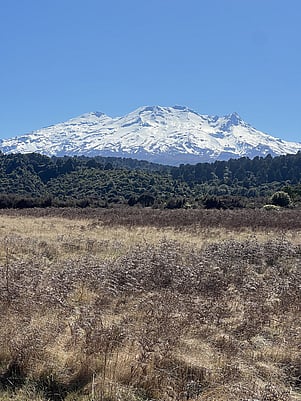
There are plenty of walking tracks close to town, ranging from short wander-through-the-bush options to something that will properly stretch the legs.
Waitonga Falls is always a good choice, particularly on a clear day when you get those classic Ruapehu views along the way. There are also shorter walks around the Mangawhero River and Mountain Road, and the Jubilee Walkway gives you an easy wander through native bush without really leaving town.
Spring is a good reminder that you don’t always need a massive expedition around here.
Now for the important bit: the food
All that activity does provide a very good excuse to eat your way around Ohakune.
There are plenty of options for coffee, breakfast, lunch or something more substantial after a day on the mountain. You’ll find cafes and eateries scattered between the main township and the Junction, so finding somewhere to refuel is not difficult.
But there is one Ohakune food experience that deserves a category of its own.
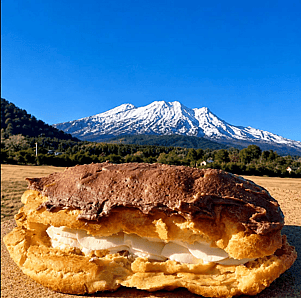
Johnny Nation’s chocolate eclairs.
If you know, you know.
Johnny Nation’s has been part of Ohakune since 1939 and its famous fresh cream chocolate eclairs have developed something of a following. People genuinely plan their stop in Ohakune around getting one, and I can’t say I blame them.
I’m fairly sure that after skiing, cycling or walking several kilometres, an enormous chocolate eclair counts as recovery food anyway.
You can’t visit Ohakune without seeing the carrot
There are some tourist attractions you visit because somebody tells you that you should.
Then there is a 7.5-metre carrot sitting beside the main road.
Ohakune’s giant carrot has been here since 1984 and these days it has plenty of vegetable company at Carrotland Adventure Park. There’s a playground, walking areas and enough giant vegetables to make for some fairly entertaining photos.
The carrot is quirky, but it also tells an important part of Ohakune’s story. Carrots have been grown around here for generations and they thrive in the volcanic soils of the Ruapehu district.
Which, rather conveniently, brings us to gin.

And finally, come and see what we do with the carrots
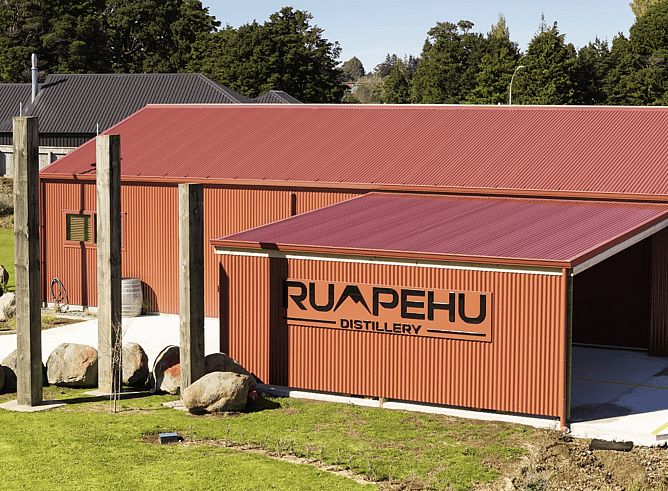
A few minutes from the giant carrot you’ll find Ruapehu Distillery, where we decided that one of Ohakune’s most recognisable vegetables deserved another job.
Award winning Straight Up Carrot Gin is made here in Ohakune using carrots alongside juniper, locally sourced horopito, coriander seed, orange peel and orris root. It sounds unusual, and that is generally what brings people through the door in the first place.
If you have spent the day exploring the area, call into the tasting bar or book a distillery tour and see where it is made. You’ll meet Nigella, our copper pot still, learn a bit about how gin actually gets from botanicals to bottle, and of course taste the end result.
There is something particularly nice about tasting a carrot gin in the town famous for growing carrots, underneath an active volcano, after spending the day skiing, riding or walking around the landscape it comes from.
Spring really is a good time to visit Ohakune
Winter gets plenty of attention around here, and rightly so, but spring is a pretty special time to experience Ohakune. Not to mention those tell-tale spring blooms popping up everywhere.
You can ski Mt Ruapehu in the morning or wait for the snow to soften in the afternoon. You can ride through native forest, walk to a waterfall, photograph yourself beside an enormous carrot, eat a Johnny Nation’s éclair and finish the day with a gin made just down the road.
The only real problem is deciding what to do first.