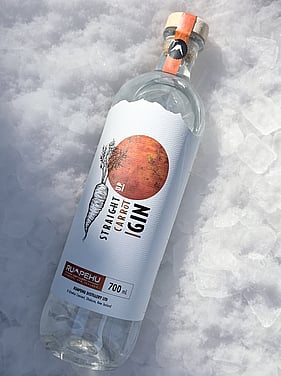
Ever picked up a bottle of craft gin, looked at the price tag, then glanced at the bottle sitting beside it that's half the price? Fair question. After all, they're both gin... aren't they? Premium craft gin usually costs more because it is produced in smaller volumes, uses high quality ingredients, involves more manual work and carries substantial alcohol excise tax.
The reality is that most people don't see what goes into making a bottle of craft gin made in a craft distillery . They see the finished product sitting on a shelf. They don't see the months of recipe development, the hours spent around a still, or the mountain of paperwork that seems to accompany every litre of alcohol produced.
So, where does the money actually go?
It all starts with what's inside the bottle
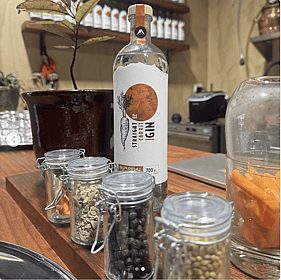
It starts with the raw ingredients. Premium botanicals that are bursting with flavour don't come cheap. Juniper berries are the most abundant in any recipe and they are generally sourced from outside New Zealand, which automatically adds to the price tag. Orris root, although used in much smaller amounts, would be more aptly named orris gold! It is expensive, but distillers value it for helping bind and hold botanical aromas together. Add coriander seed, angelica root, pepper berries and whatever else a distiller chooses to use in their recipe; it all adds up.
Every botanical has a job to do. Some provide citrus notes, others spice, others texture or balance. Getting them to work together is a bit like conducting an orchestra. If one instrument plays too loudly, everyone notices.
Small-batch gin cannot compete on scale
One of the biggest differences between craft gin and mass-produced gin is scale.
Large producers can make enormous volumes in a single run. They buy neutral spirit, botanicals, bottles, labels and packaging in bulk. Their labour, equipment and compliance costs are spread across thousands, or even millions, of bottles. The more they make, the lower the production cost of each bottle becomes.
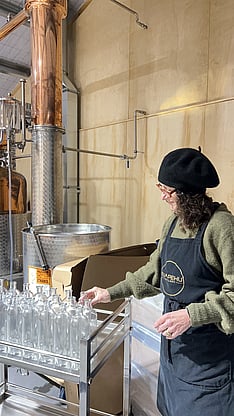
A small batch distillery works very differently. We may spend much of the same day preparing botanicals, running the still and cleaning everything down, but finish with only a few hundred bottles. The ingredients, packaging, electricity, labour, testing and cleaning costs are divided across that much smaller batch.
That does not mean large producers cannot make good gin. Many do. They simply have economies of scale on their side. We have significantly fewer bottles over which to spread the bill.
Not every drop makes it into the bottle
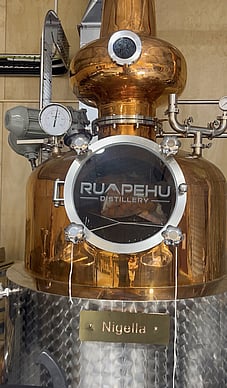
The first spirit to come off the still isn't suitable for the bottle. Neither is the last. Distillers carefully separate the heads, hearts and tails, keeping only the best part of the run.
Think of it like carving a roast. You don't serve the trimmings to your guests. That means a percentage of every distillation never becomes part of the finished gin. You're paying for quality, not quantity.
Making New Zealand craft gin is also surprisingly hands-on. People often imagine giant production lines with robots doing all the work. Some large distilleries certainly operate that way. Most craft distilleries don't. Every bottle still needs to be filled, sealed, labelled, packed and checked.
Then there's the elephant in the room... excise tax
Here's the part that surprises almost everyone who visits. One of the biggest costs in every bottle of gin production isn't the botanicals, the bottle or the label.
It's the tax. Long before a bottle reaches the shelf, a significant portion of its cost has already been committed to government charges, regardless of whether you're a multinational producer or a small distillery in Ohakune.
New Zealand has one of the highest excise regimes on spirits in the world, and every year that excise is automatically adjusted for inflation. On 1 July this year, it increased again, continuing a decade of annual CPI-linked rises. Excise is now one of the largest single costs in every bottle we sell.
Across the Tasman, Australia recognises that producing 500 bottles isn't the same as producing five million. Their excise remission scheme helps smaller producers reinvest in equipment, employ staff and grow their businesses.
Here in New Zealand, our industry body, Distilled Spirits Aotearoa, continues to advocate for a similar rebate system that would support local distilleries while helping the industry remain competitive. The aim isn't special treatment. It's creating a level playing field that allows small producers to invest, innovate and grow. This will ultimately benefit our local communities and economies.
Is Craft Gin worth the money?
Ultimately, that's up to you. Craft gin isn't expensive because it's fashionable. It's more expensive because it's made differently. If you're simply looking for the cheapest bottle on the shelf, there are plenty of options.
But if you appreciate premium botanicals, small-batch production, craftsmanship and supporting local New Zealand producers, craft gin offers something very different.
You're not just buying a bottle. You're buying the story, the skill and the people behind it.
At Ruapehu Distillery, we wouldn't have it any other way. After all, if you're going to spend the day making gin beneath an active volcano, you may as well do it properly.
Frequently Asked Questions
Why is craft gin more expensive than other gin?
Craft gin is made in much smaller batches using premium botanicals, slower distillation methods, strict quality control and significant manual labour. Excise tax is also a major component of the retail price.
What is excise tax on spirits?
Excise is a government tax applied to alcohol based on the amount of pure alcohol in the product. In New Zealand, spirits attract one of the highest excise rates and the rate is automatically adjusted each year for inflation.
Why do craft distillers not use some of the spirit?
Only the highest-quality portion of the distillation, known as the "hearts", is kept for the final product. The heads and tails are separated to ensure a cleaner, smoother spirit.
Are all craft gins hand bottled?
Many boutique distilleries still bottle, label and inspect their products by hand or with small-scale equipment, rather than fully automated production lines.
Is premium gin worth the extra money?
That depends on what you value. If flavour, quality ingredients, craftsmanship and supporting local producers matter to you, many people believe the difference is well worth it.